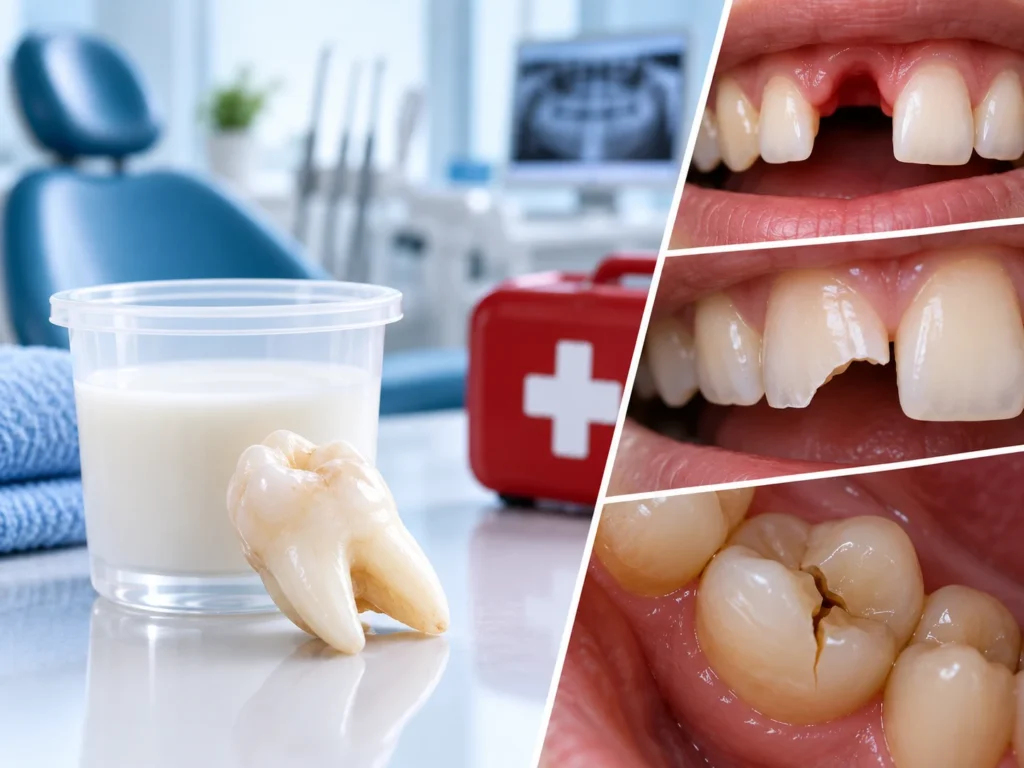
Chipped or Knocked-Out Tooth? What to Do First
Medically reviewed by Dr. Ali Fatemi, DDS, FAGD, MAGD, FICOI, MaCSD — Fatemi Family Dentistry, Gaithersburg & Lexington Park, MD.
A completely knocked-out adult tooth can often be saved — but the window is roughly one hour, and what you do in the first few minutes decides it. Below are the exact steps for the three most common dental emergencies. Read the knocked-out-tooth section first if that’s what’s happening; the clock is the whole story there.
If you have facial swelling that affects your breathing or swallowing, uncontrolled bleeding, or a jaw injury from trauma, that is a medical emergency — go to the nearest emergency room or call 911, not the dentist.
A knocked-out (avulsed) tooth
This is the true race. An adult tooth out of its socket starts to lose the living cells on its root surface within about an hour of being dry. Steps:
- Pick it up by the crown (the white chewing part), never the root.
- If it’s dirty, rinse it gently with milk or saline (salt water) for a few seconds. Do not scrub it, and do not remove any tissue attached to it.
- If you can, put it back in the socket and bite gently on a clean cloth to hold it. A tooth kept in its own socket does best.
- If you can’t reseat it, keep it moist in cold milk — not water. Water damages root cells faster than milk does. Tucking it inside the cheek also works for an adult who won’t swallow it.
- Call your dentist immediately and head in. Baby teeth are not reimplanted, but call anyway.
A chipped or broken tooth
- Rinse your mouth with warm water and save any pieces if you can — sometimes they can be bonded back.
- If there’s bleeding, press clean gauze on the area for about 10 minutes.
- A cold compress on the outside of the cheek reduces swelling and pain.
- A small chip isn’t usually an after-hours emergency, but a large break that exposes the yellow inner layer or a pink/red center needs prompt care — that’s the nerve, and it will hurt and can get infected.
A cracked tooth or a lost filling/crown
A cracked tooth often hurts most when you bite down and release. Avoid chewing on that side and get it looked at soon — cracks tend to spread. If a crown falls off and you still have it, keep it; a dentist can sometimes recement it. Over-the-counter dental cement can hold a crown temporarily, but it is a stopgap, not a fix.
For pain until you’re seen
An over-the-counter pain reliever used as directed on the label helps. One thing to never do: do not place an aspirin directly against the gum or tooth. Aspirin is an acid: it doesn’t numb the area, and it chemically burns the tissue. Rinse with warm salt water instead, and keep the area clean.
How our emergency line actually works
Being honest about this matters, because “24/7 emergency dentist” is often oversold. We are not a 24-hour practice and we are not an emergency room. When you call after hours, our answering machine records your message and emails it straight to the practice, and Dr. Fatemi answers personally as soon as he reasonably can — which means a message left at 2am is answered in the morning, not overnight. If your situation cannot wait that long, go to the nearest hospital emergency room. For time-critical injuries like a knocked-out tooth, call as you’re already following the steps above — don’t wait for a callback to start acting.
What you can do now
Save our number in your phone before you need it. In a real emergency, the difference between saving and losing a tooth is often measured in minutes, and hunting for a number is time you don’t have.
See our emergency dentistry details and phone numbers →
If a tooth can’t be saved, it doesn’t have to stay a gap — dental implants replace it from the root up. Questions? Contact our Gaithersburg or Lexington Park office.
General first-aid information, not a diagnosis or a substitute for being seen. Outcomes depend on the specific injury and how quickly it’s treated. Please confirm all clinical content against your practice’s regulatory and compliance requirements before publication.
Leave a Reply