Medically reviewed by Dr. Ali Fatemi, DDS, FAGD, MAGD, FICOI, MaCSD — Fatemi Family Dentistry, Gaithersburg & Lexington Park, MD.
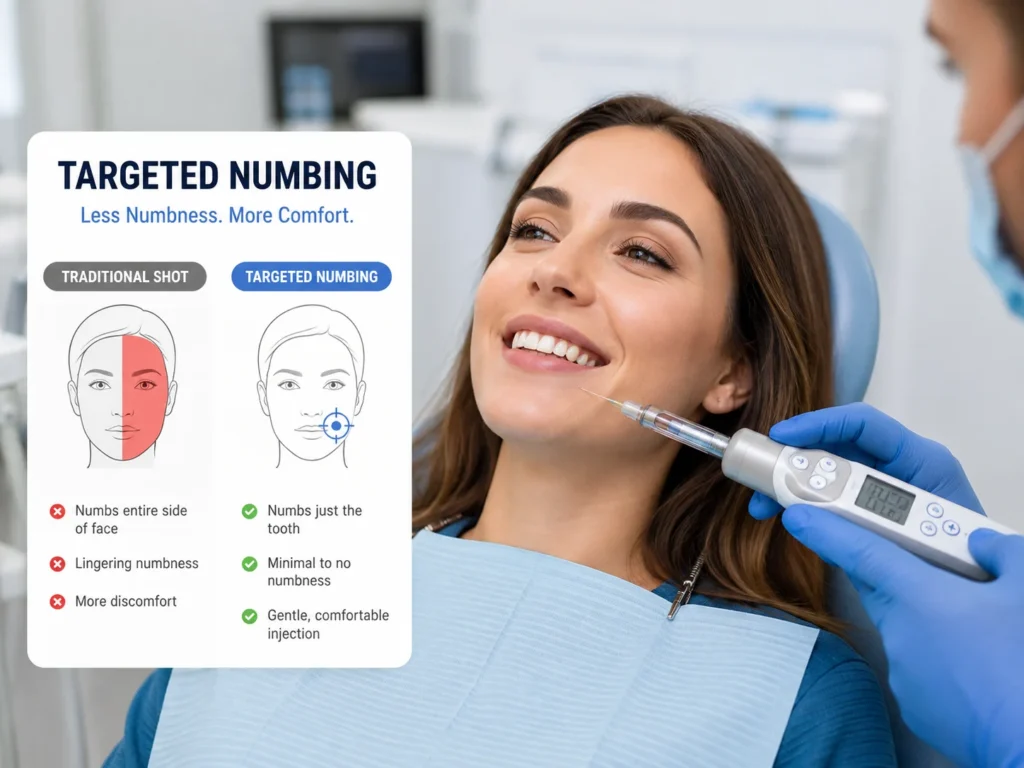
The half-numb face, the drooping lip, the two hours of not being able to drink coffee without wearing it — that’s not the treatment, it’s the anesthetic spreading further than it needed to. Newer, targeted numbing can numb just the tooth being worked on and leave the rest of your face feeling normal. Here’s how it’s different from the classic dental shot.
Why the traditional shot numbs so much
A standard lower-jaw injection (a “block”) deposits anesthetic near a main nerve branch, which numbs everything downstream of it — the tooth, yes, but also your lip, cheek, and half your tongue. It works, but it’s a broad approach for what is often a single-tooth job, and that over-numbing is the part patients dislike most.
What targeted, computer-controlled numbing does
We use a computer-controlled delivery system that lets us numb a single tooth by delivering anesthetic precisely, at a controlled, steady rate. Two things change as a result:
- Less collateral numbness. Because it targets the specific tooth, your lip and face are far less likely to go numb — many patients walk out able to talk and eat normally.
- A gentler injection. The sting of a dental shot comes largely from anesthetic being pushed in too fast. Computer-controlled flow delivers it slowly and evenly, which most people find noticeably more comfortable than a hand-pushed syringe.
Dr. Fatemi uses an electronic anaesthesia system that delivers the anaesthetic slowly and steadily, which significantly reduces the discomfort of the injection itself.
Who benefits most
Targeted numbing is especially worth asking about if you:
- hate the lingering numb-face feeling and want to get back to your day;
- have a single tooth being treated rather than a whole quadrant;
- are anxious specifically about “the shot” — the slower delivery takes the edge off;
- have had trouble getting fully numb with standard injections in the past.
How it fits with sedation
Numbing and sedation do different jobs and often work together. Local anesthetic blocks pain at the tooth; sedation calms your whole body and nerves. For a comfortable, anxious, or lengthy visit you might have both — targeted numbing so the tooth feels nothing, and sedation so you’re relaxed or asleep for the experience. They’re complementary, not either/or.
It’s a small thing that changes the whole visit
Comfort details like this are easy to overlook when choosing a dentist, but they’re exactly what determines whether you actually keep your appointments. Not having to plan your afternoon around a numb face is a bigger deal than it sounds.
See the comfort technology we use across our care →
Curious whether targeted numbing is right for your treatment? Ask our Gaithersburg or Lexington Park team.
General information, not a diagnosis. Which anesthetic approach suits a given procedure is a clinical decision made with you. Please confirm all clinical content against your practice’s regulatory and compliance requirements before publication.

Leave a Reply